Photography #15
Favorite places

I do not wish to ever forget our four months living in Sendai. I want to remember all of the sights, sounds, and smells of the changing seasons around our apartment as it transitioned from frosty snows to humid rains. I want to recall the feeling of walking past shops, open to the front, and waving to our friends inside. I want to look back fondly on my carefree schedule and being able to walk slowly through a park and notice small things like a hawk hovering stationary in the air above me as the wind blows against his wings.
I’m glad to be heading home and onto the next chapter of our life, but Sendai has been an exceptional journey — with plenty of both ups and downs. Needless to say, I’m really glad that Emily and I decided to take this adventure on.
Each section below captures a place that has been special to Emily and I. I wanted a photo of each so that I can remember them and what it felt like to walk around the neighborhood.
This will not be the final post on KK’s Delivery Service. The obligation of a regular posting has been a great motivator for me to actively pursue my photography hobby, and, as much as this would shock my younger self, I have enjoyed writing for others. However, I will be posting less frequently and aiming for a monthly post instead of the 3-4 per month I’ve been averaging. Please stay tuned if you are interested in continuing to hear more from me!
Echoes
How to make friends in Japan? I don’t think we fully cracked the answer to that question, but we did our best and seemed to make earnest progress.
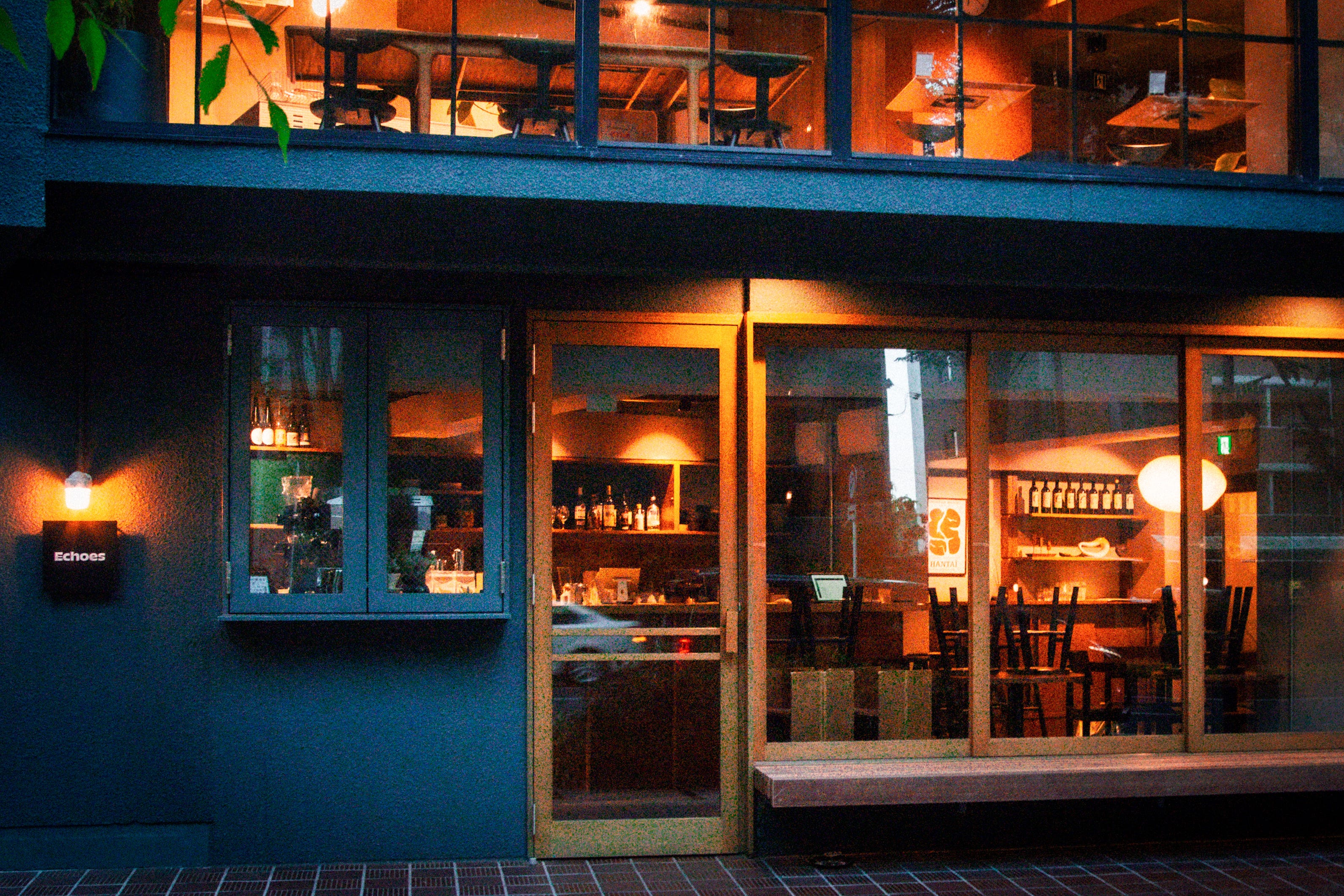
One solution is to just go to the same places over and over and eventually work up the courage to strike conversation with someone: staff or other guests. For us, we tried this out at the local coffee shop, our most frequented spot. It sat on our street with large bay windows inviting passersby to peer in and enter.
The Echoes members didn’t speak English and our Japanese was quite poor at the start, but we made a lot of effort through hand gestures and waving. Over time, short little hellos became longer conversations and we could share more about ourselves. In the last couple weeks, we would go out together to Izakaya or bars (Beron) in the area — I wish we could’ve stayed longer, if only to keep getting to know them better.
As a send-off, we made them a jar filled with origami paper cranes that we folded — one for each visit over the 4 months — and they gave us a handwritten note on a bag with some goodies inside.
One last non-sequitor, the food menu was designed by a great chef who likes fermented foods, so they had great pickled cabbage, sourdough bread, and breakfast plates. Another part of that menu was a French pastry called a canelé, which they baked to perfection and I ate enough to offset the frequent running I was doing.


Beron
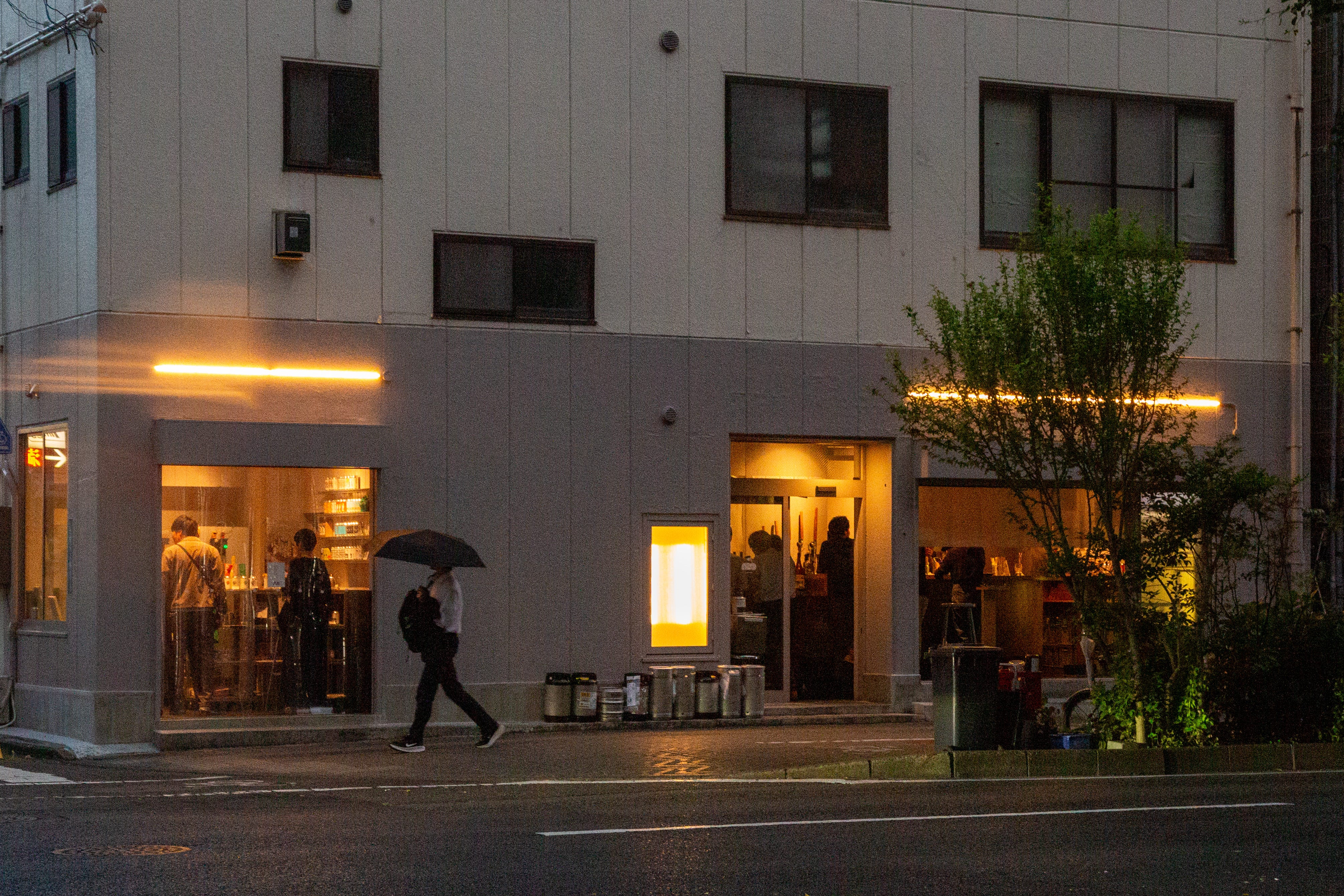
The second great way to meet people in Japan is to just go to a bar and strike up conversation with the person next to you — an outing antithetical to our usual routines. However, Emily and I did get up the gusto to make our way the far distance of 2 blocks to Beron. Upon entering, Kohei, with a big smile and hello, waved us in and after a moment’s consideration showed us to a specific section of the U-shaped bar.
We soon realized, he chose the spot tactically. We were put next to someone who could speak a little English and was happy to speak with newcomers. The next time we came, the same thoughtful treatment. Kohei treated the bar as a community to foster and each new entrant as an important person to be made to feel welcomed. The rest of the staff are also trained to bring this same considerate approach and strike up engaging conversation, so we got to know quite a few of them and would wave hello as we saw them around town.
There is a myth in the US, especially by people steeped in ‘business’, that the best businesspeople are located in corporate suites and running major enterprises (cough Elon Musk cough). If you can build a great business, why not make the most money and be at the center of the most prestigious companies.
Kohei-San proves that myth false. He has built an exceptional business in Beron that is an important establishment in Sendai. It is a community powerhouse that acts as a hub for an incredibly wide spread of people from all age ranges and interests. He will also take Beron on the road with a pop-up tent that is a mainstay at regional festivals and events.
Kohei’s business is community and he has built a large one. His rotating tap pulls beers from craft breweries across all of Japan, the patrons come from all over Sendai and pull in friends from cities even further away, and the bartenders are active in striking up conversations and pulling solitary folks into groups.
Nordic
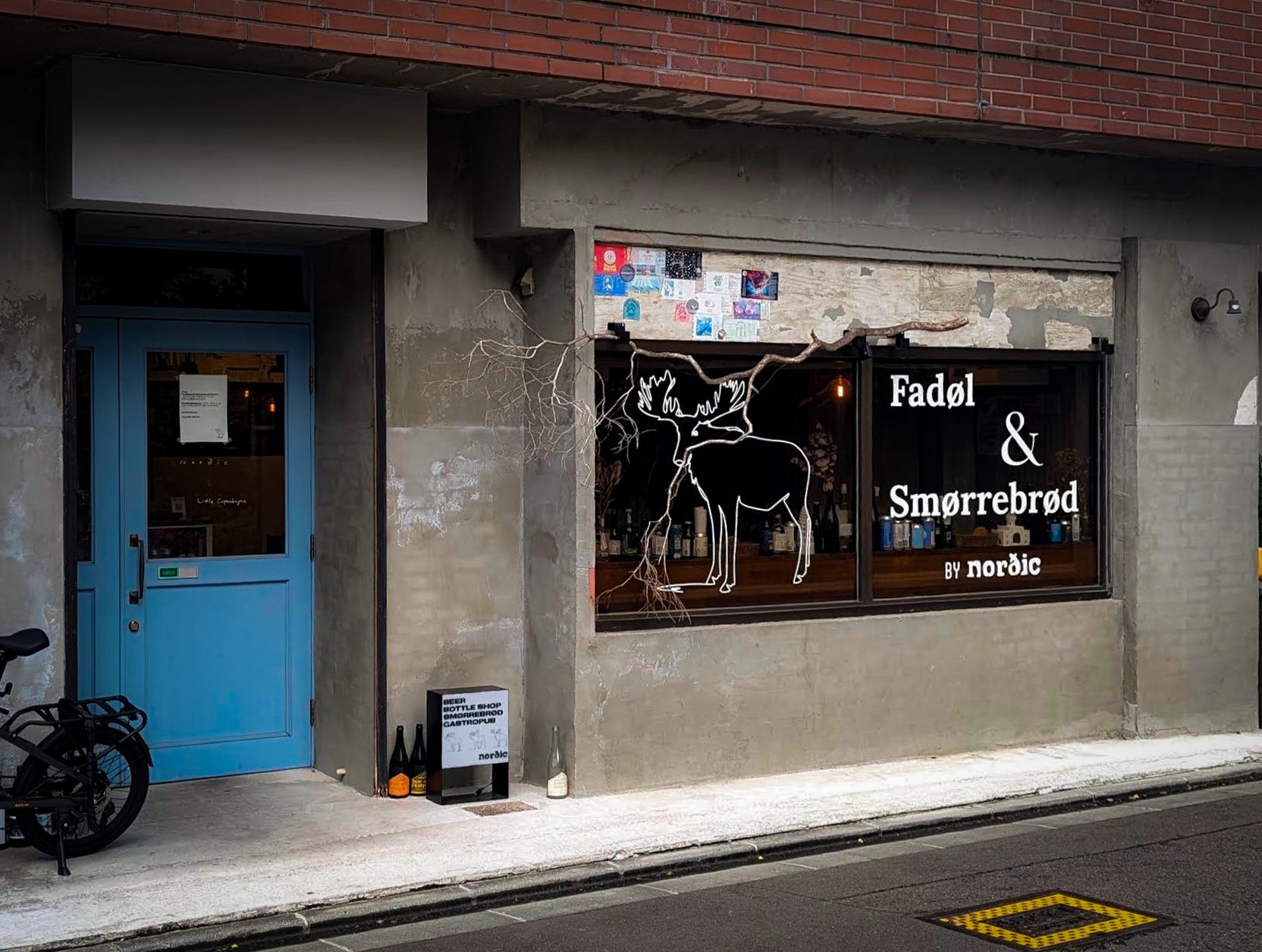
We were originally recommended to try Nordic by an Australian couple that we met in Echoes. They had been living in Sendai for 8 years and both worked as professors at the University, and they could sporadically be seen at Echoes which was near where their two kids went to school.
A Danish restaurant in a Japanese town may seem like an odd proposition, but the owner makes the concept work so well. He is a beer fanatic and sources craft beer from all over, with an emphasis on Denmark and Belgium. Additionally, he really likes Smørrebrød and makes multiple delicious types (our favorites being the salmon and fuka ones).
While originally described to us as a little stiff, Satoshi-San in our opinion was a quite jovial and humorous person. He always liked to ask where we had been, what we liked to do, and offer fun facts (like that the rare 2000-yen note we handed him is commonly known as the ‘Okinawan note’ since it depicts a famous gate from there). Always a reliable spot for good conversation and a high quality meal. He even got Emily to enjoy beets and dill, two previously undesired ingredients.
萬宝飯店
I vividly recall our two first meals in Sendai after moving into our apartment. The first was the night of our arrival — tired, shopped a full day for bare essentials, the only tenants in our entire apartment building (literally), and knew very little about the area around us. Most places were closed that late in the evening so we went to a hole in the wall pizza spot (not Rocco, see below, unfortunately). There we ate the saddest NY-style pizza in a sleepy shop. Not a great start.
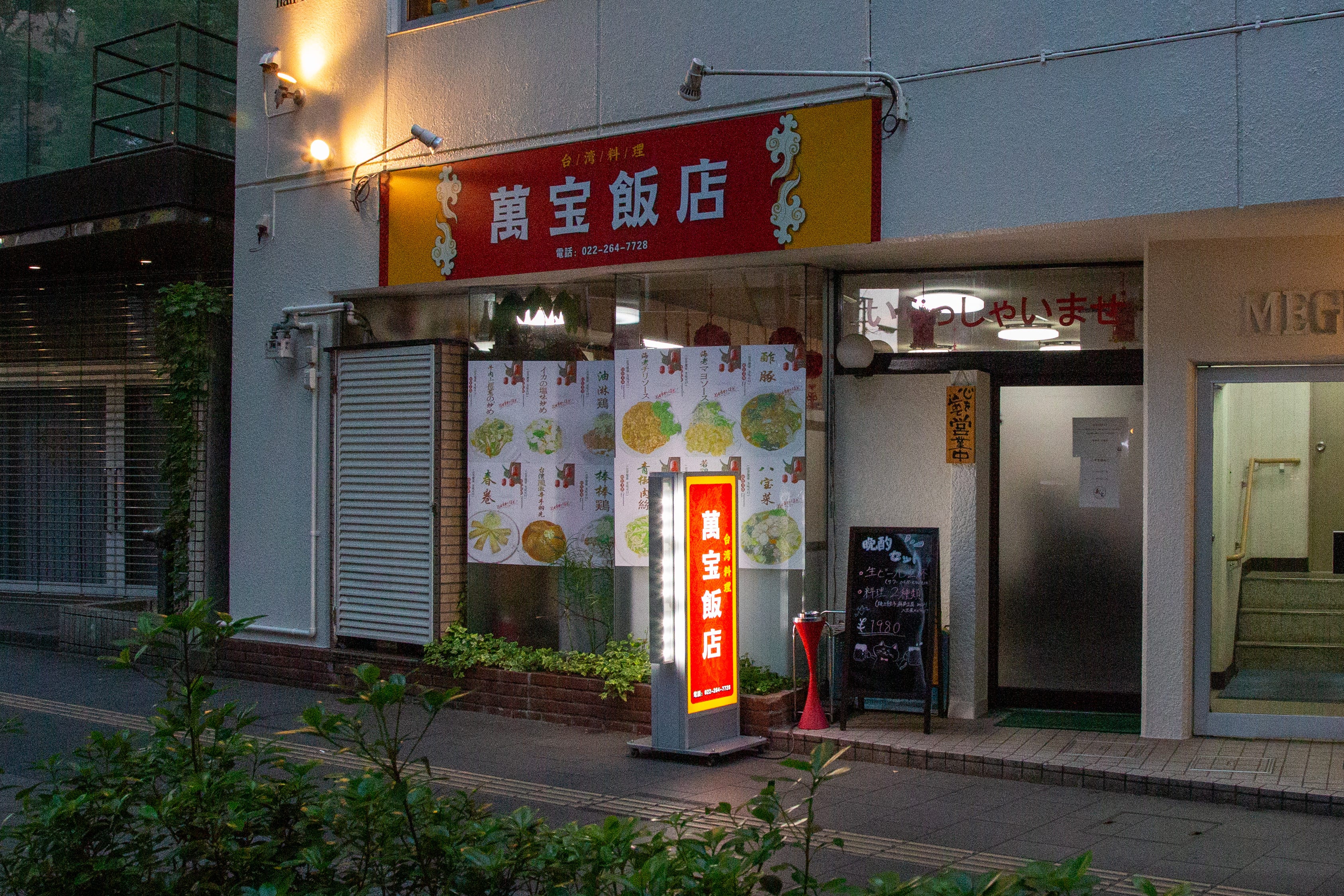
For the second meal, we tried to walk into a yakitori restaurant on our block. The place was empty, but we were on the earlier side at 5:30pm. The owner asked us a question in Japanese and I gave a blank stare. I now know he was asking if we had a reservation, but at the time my brain was not thinking fast enough. He quickly changed tactics and said ‘sorry, full for tonight’ before showing us the door. I think it was a blessing in disguise because, a bit disheartened, Emily and I walked into the Chinese restaurant next door.
It is very unassuming from the outside, with an opaque door hiding the interior. The couple that runs the restaurant are some of the warmest folks we have met in Sendai. The husband is in the kitchen making the food while the wife manages the front-of-house, and they have two kids that are sometimes returning from school or helping around. The food is really good quality, of the kind where someone clearly knows how to create every sauce from scratch.
This store has become a weekly visit of ours and I’m ashamed to say that we just about order the same 4 dishes every time with maybe a little variation every now and then. There has been something exceptionally comforting about having a local store a block from our home where the owner gives us a big smile whenever we walk in, and we know we can get a warm meal on a rainy or tiring day.
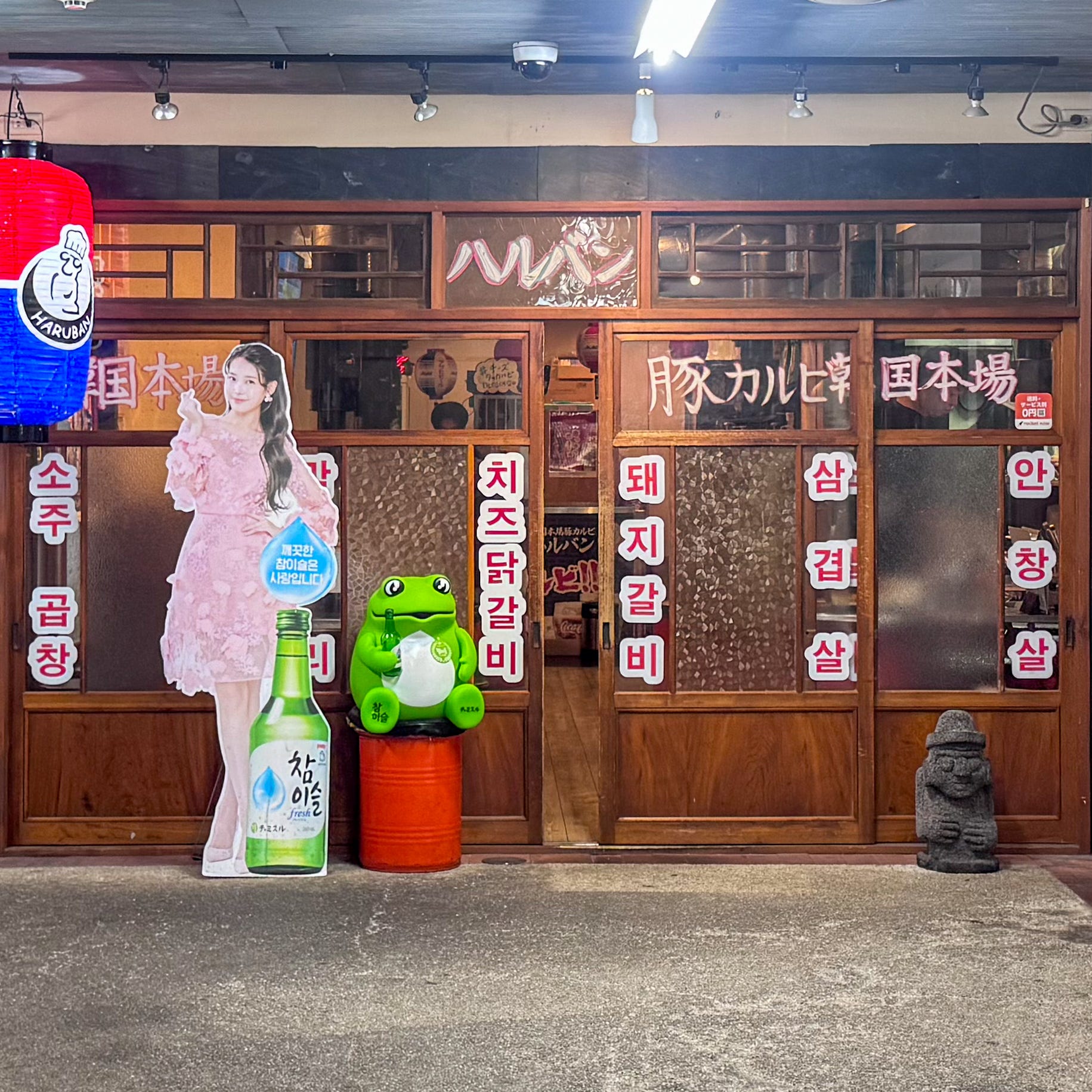
Haruban
This list continues to fill up with non-Japanese restaurants, but that was the charm of Sendai. The people who lived there came from quite an array of places and had such wide ranging interests that you could find a lot of unique spots.
This Korean spot was run by a lovely couple (the husband had lived in NYC for 17 years and spoke fluent English) that quickly came to recognize us. We fell in love with the Choreg salad and cheese Buldak, so it became a staple of our food routine.
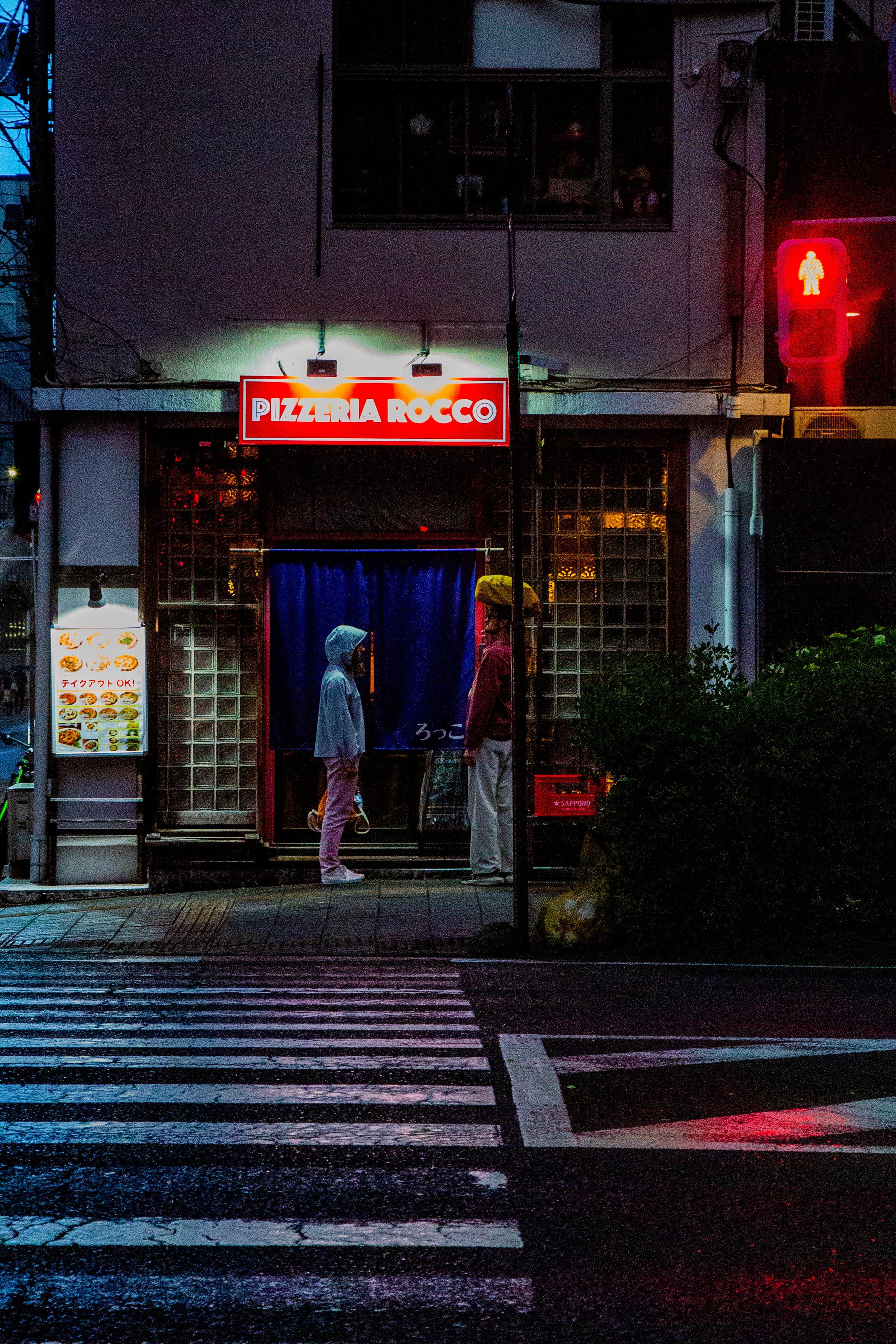
Pizzeria Rocco
It is hard to describe how small this place is. You enter and immediately bump a U-shaped counter with 12 seats. Inside the counter is just enough space for 2 cooks and a wood-fired pizza oven with space for 2 pies. They serve Neopolitan pizza here on par with the best we’ve had anywhere else and some of the most tender roast chicken we’ve eaten.
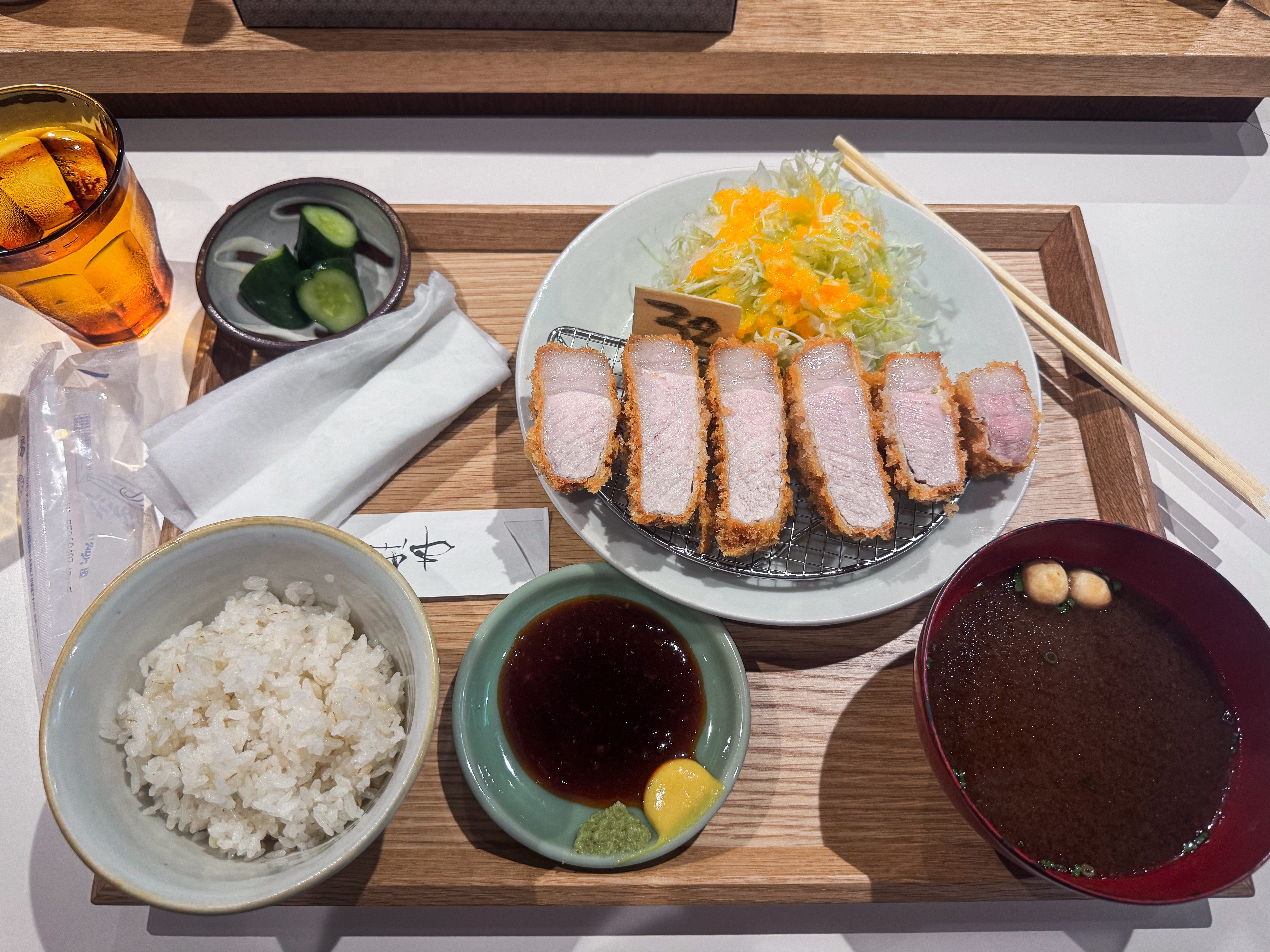
Botan
On the theme of warm, welcoming owners, the woman who runs the front-of-shop in this small but very busy katsu store has the brightest smile. I had a lovely conversation with her on my last visit where she said she’d seen me stop by a few times and asked if I lived in Sendai. I had to share that it was, unfortunately, my last day in Sendai after our multi-month stint, but that I hoped to come back and visit again.
We have been here much less than the others on this list since we didn’t find it until later, but it has the BEST pork katsu. I truly don’t think I have eaten or will eat anything that can compare. I’ll have to taste it in my dreams until I can come back one day…


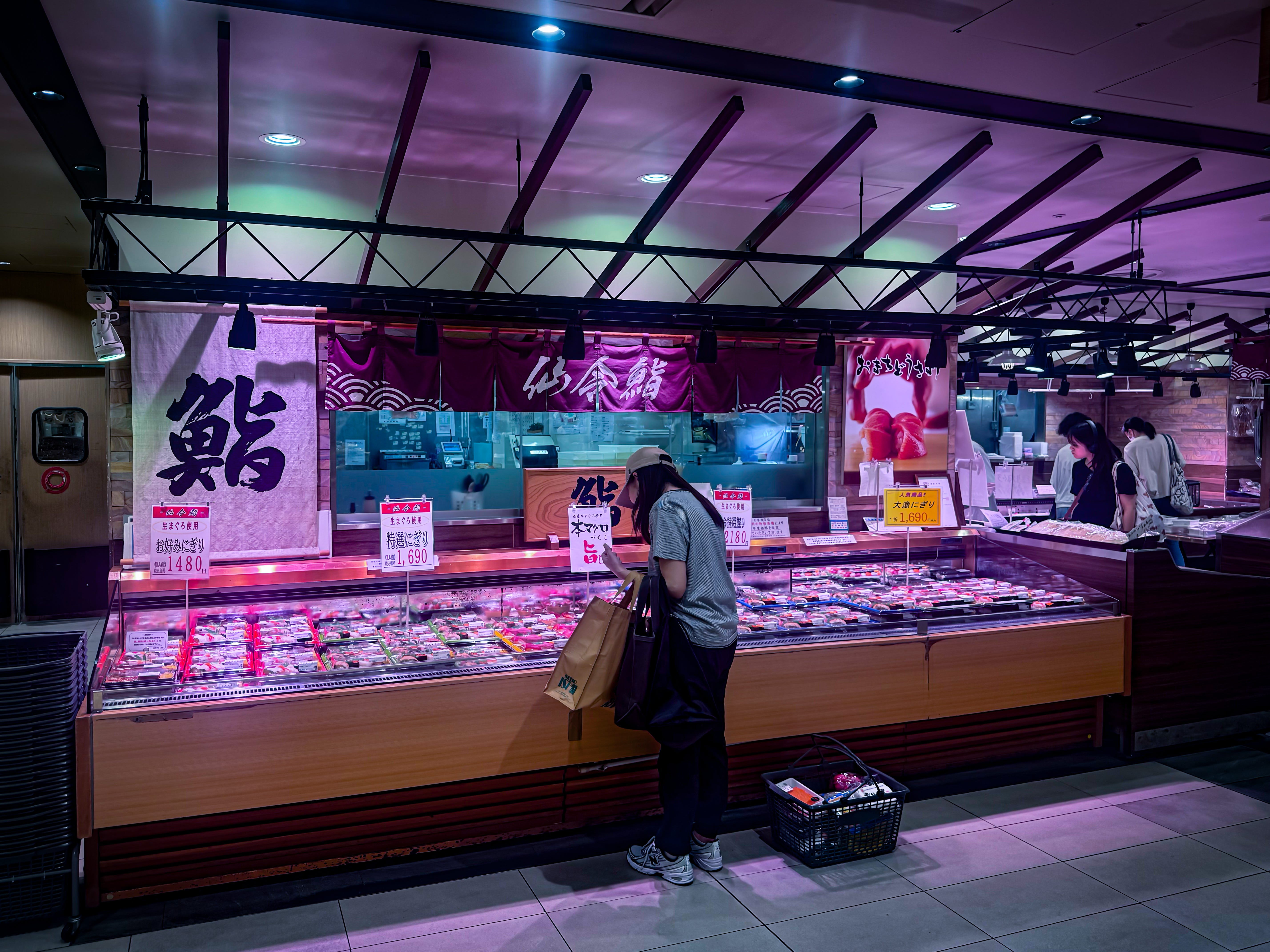
Itagaki (Sushi counter)
A grocery store may seem like an illogical place to have your favorite sushi spot, but in a city close to the ocean, the fish counter at the Sendai Station grocery store had delicious, affordable sushi. This became a favorite grab-and-go when we were coming back from day trips through the station.
I also noticed for the first time how much more excellent the quality of fish is in winter to summer — there is a freshness and optimum to the life stage of fish in the winter. Like me in the winter, fish also store more fat during the cold waters season, which lends them a higher fat content and more flavor. Additionally, the cold waters firms up the muscle fibers of the fish making them slightly crisper on the bite.
Different fish do peak in different seasons, so there are fish optimal for summer, spring, and fall; however, tuna and hamachi are both winter fish and are a couple of my favorites (Hokkaido salmon peaks in late fall and spring).
Pickleball Sendai
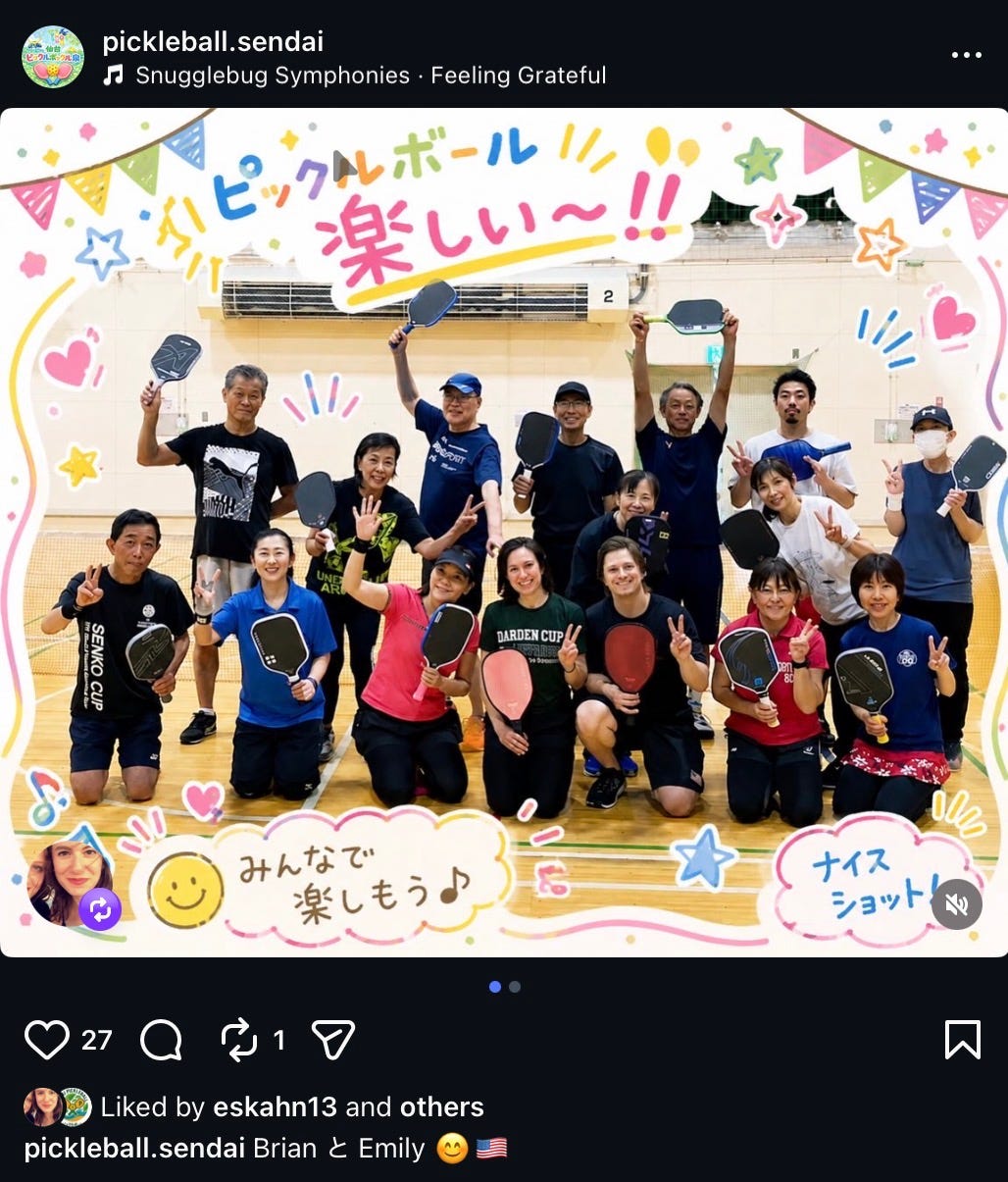
Separate from the food-focused destinations listed above, but equally as inviting has been the local pickleball group. This group meets multiple times a week at various community centers around Sendai.
The first time we went, I did not know what to expect. In the US, we usually just reserve a court and end up playing Emily vs. I or with whatever friends we have convinced to join us. This ended up being a 3.5 hour session - split into 2 hours of drills and 1.5 hrs of match play. During rests, the group was often trying to figure out who we were and why we had come to Sendai - we were clear oddities but they seemed to enjoy our company. Nobody spoke much English, so this became a great location to improve our Japanese.
We only ended up going a handful of times, but the pickleball group seemed to really love having us there and joining. On our last trip, they gifted us a bottle of sake and gave us all well-wishes and encouraged us to drop-in again if we were back in Sendai.
Others
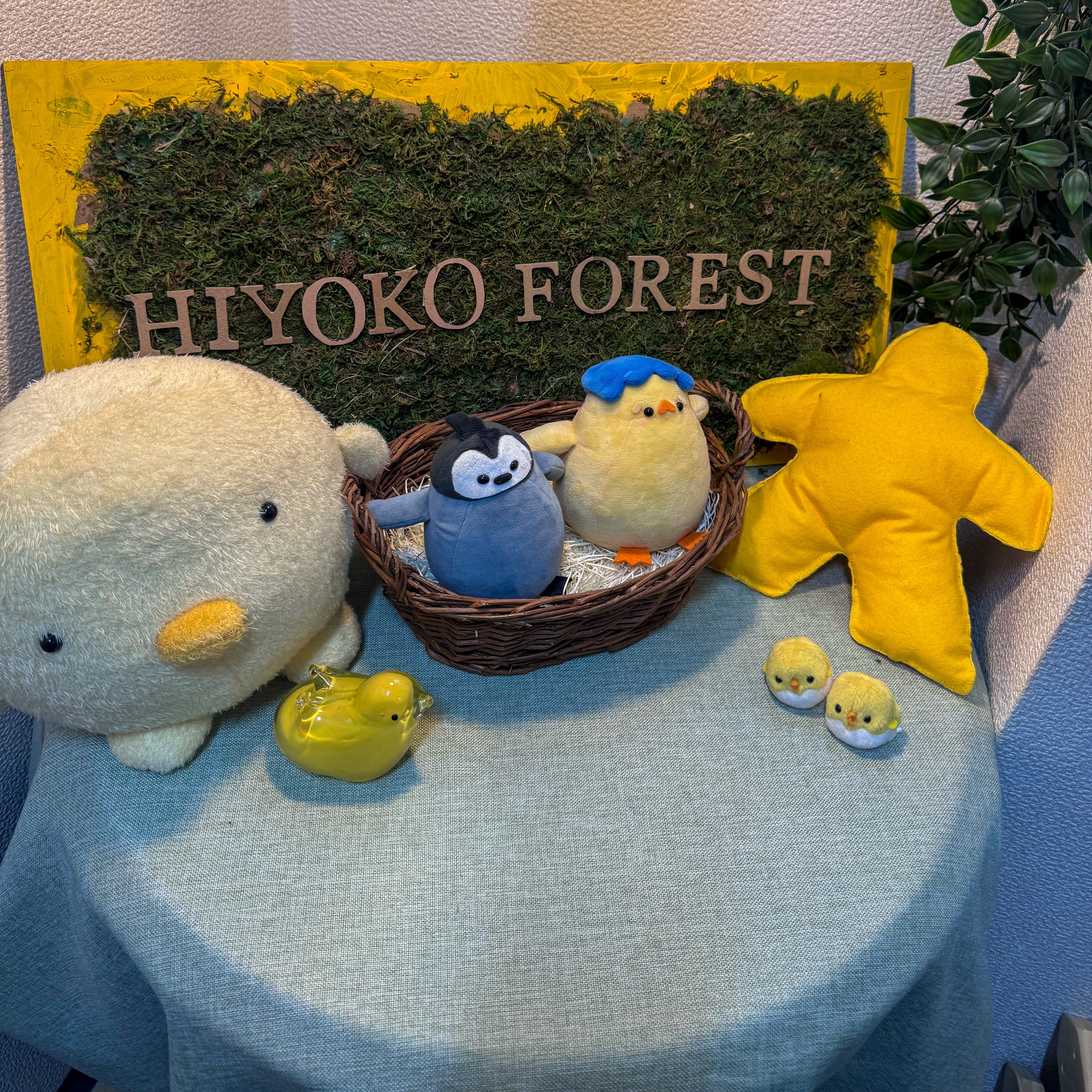
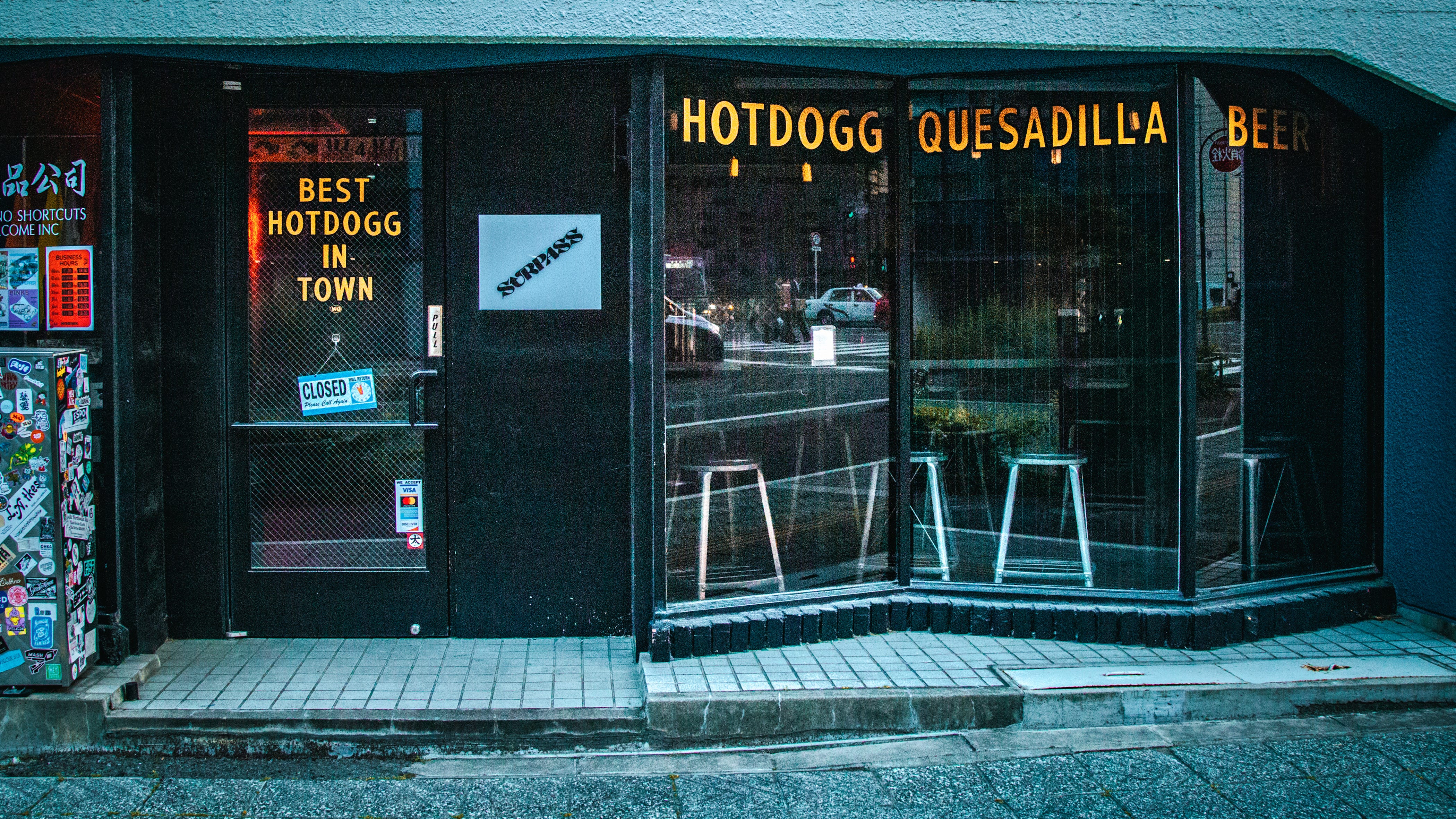
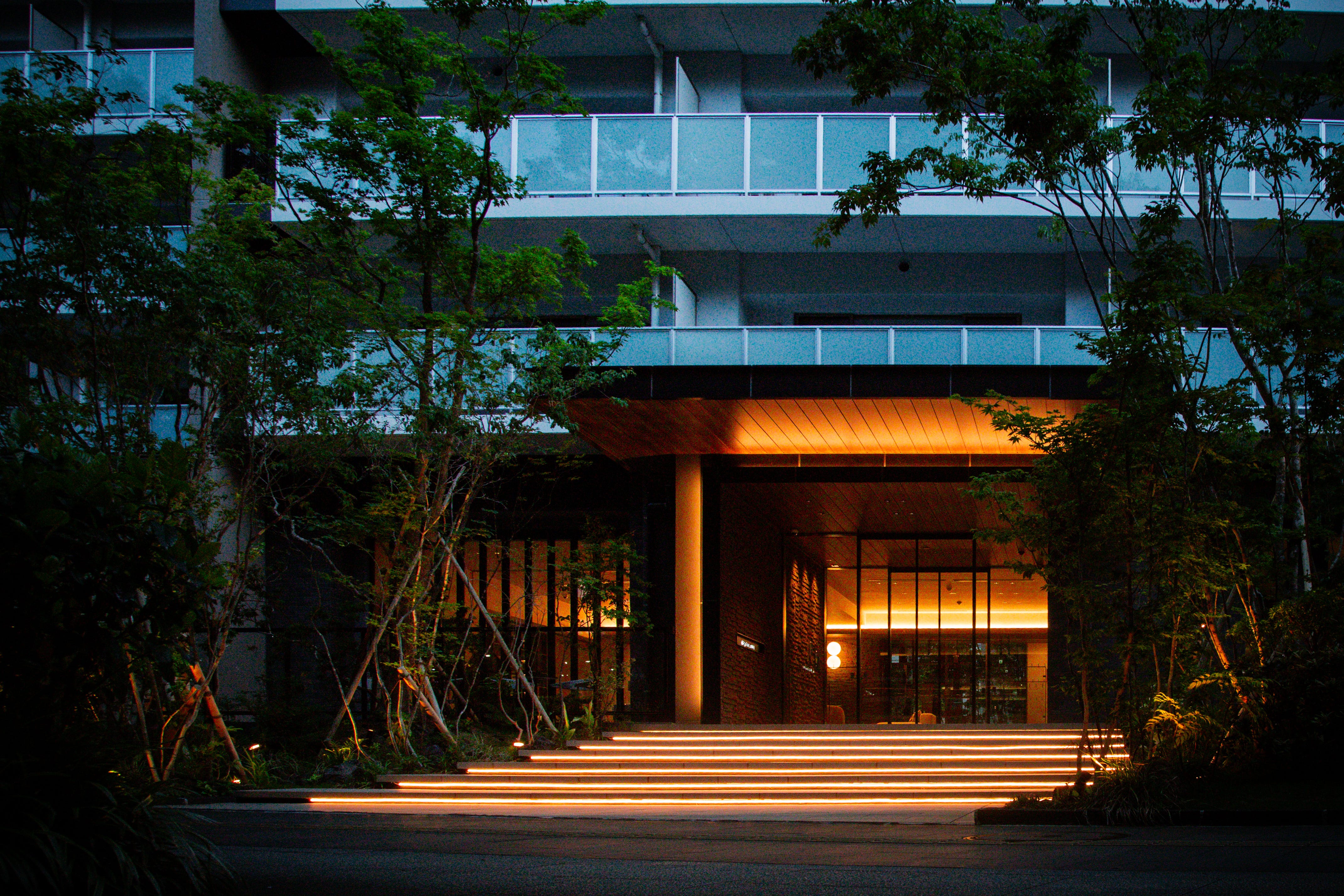
If you made it this far through the post, congrats and thanks for continuing to read my stories! The rest are a smattering of locations around Sendai that didn’t feel like their own section, but I wanted to add in here somehow with a short caption.
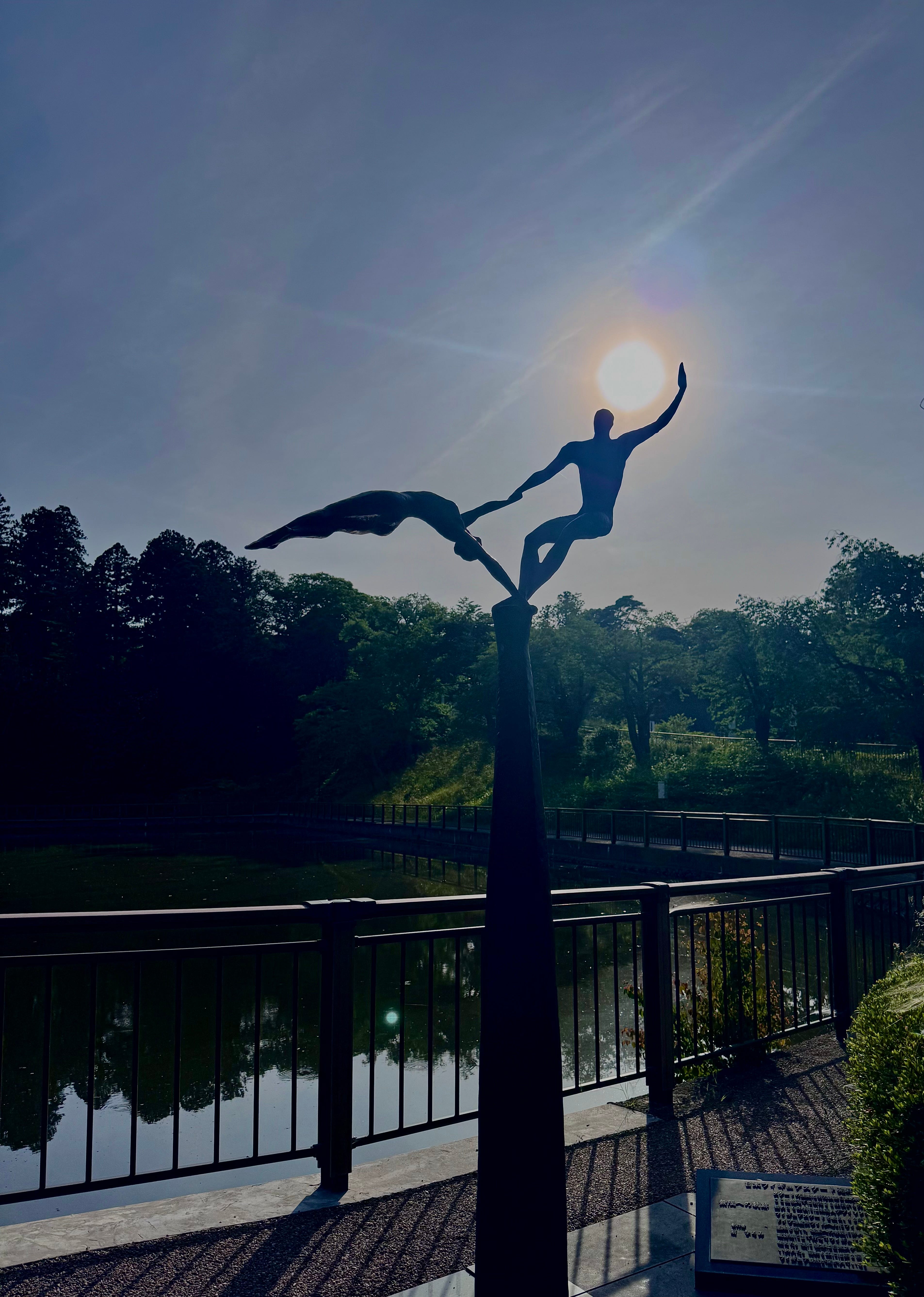
Thanks for sharing your thoughtful observations and beautiful photos. I’m a sucker for the fun ones like the paired skaters holding up the sun. Looking forward to seeing you both soon. 😘
Have loved reading your posts and living vicariously through your eyes for the past 4- 6 months. I look forward to future posts - from Chicago (or wherever)!